
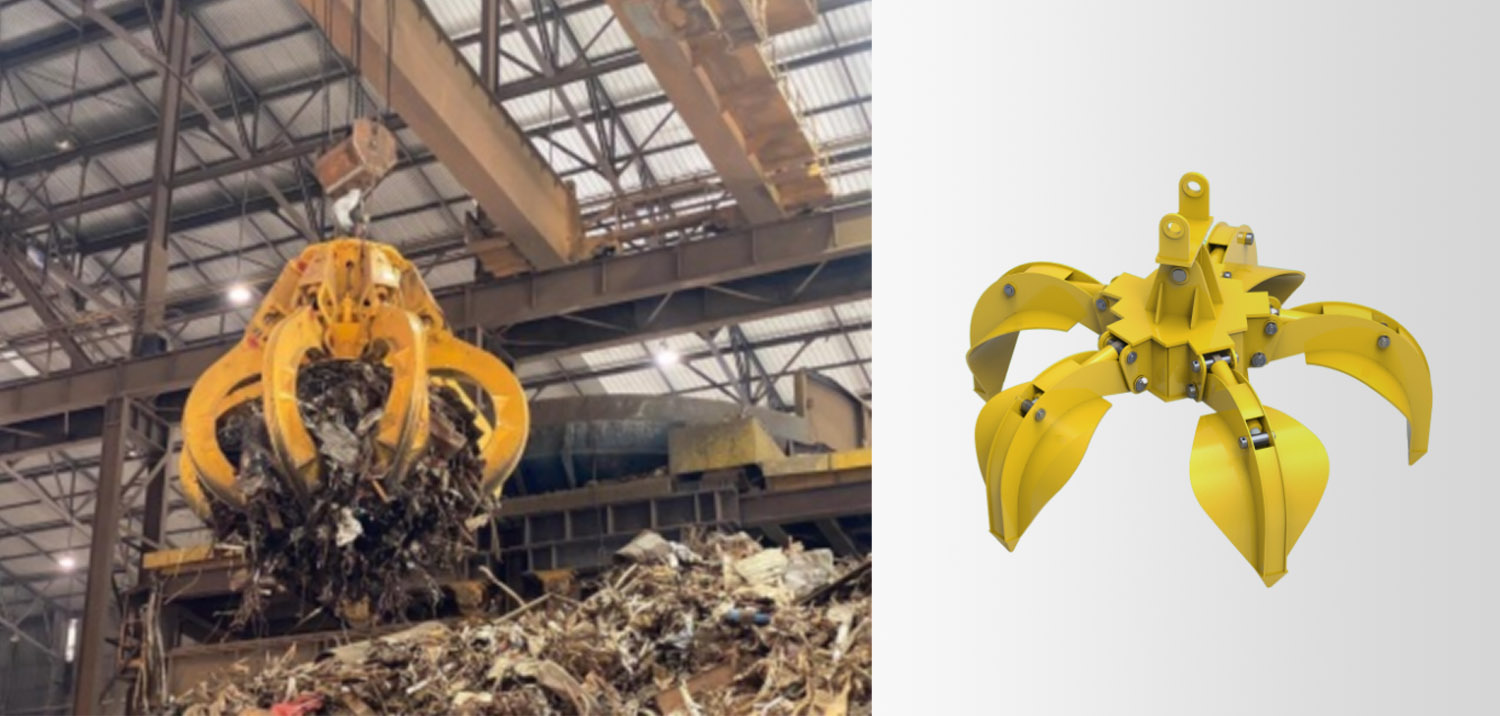
A slab lifting tong is a heavy-duty mechanical gripping device used extensively in steel manufacturing and heavy material handling to hoist, transport, and position massive steel slabs.
Key Operating Principles :
- Mechanical Leverage : It operates using a scissor-linkage mechanism. As the crane hoists the central ring upward, the linkages convert the sheer downward weight of the steel slab into a massive, horizontal clamping force.
- Friction & Grip : The heavier the payload, the tighter the jaws clamp down. The contact points on the jaws are typically fitted with hardened steel points or high-friction gripping pads to bite into the slab and prevent slipping.
- Latching Mechanism : Most industrial slab tongs feature an automatic stepping latch (an indexing mechanism). This allows the crane operator to toggle the tongs between a "locked open" state (to lower over a new slab) and an "unlocked/gripping" state simply by lowering and raising the hoist, eliminating the need for manual rigging on the ground.
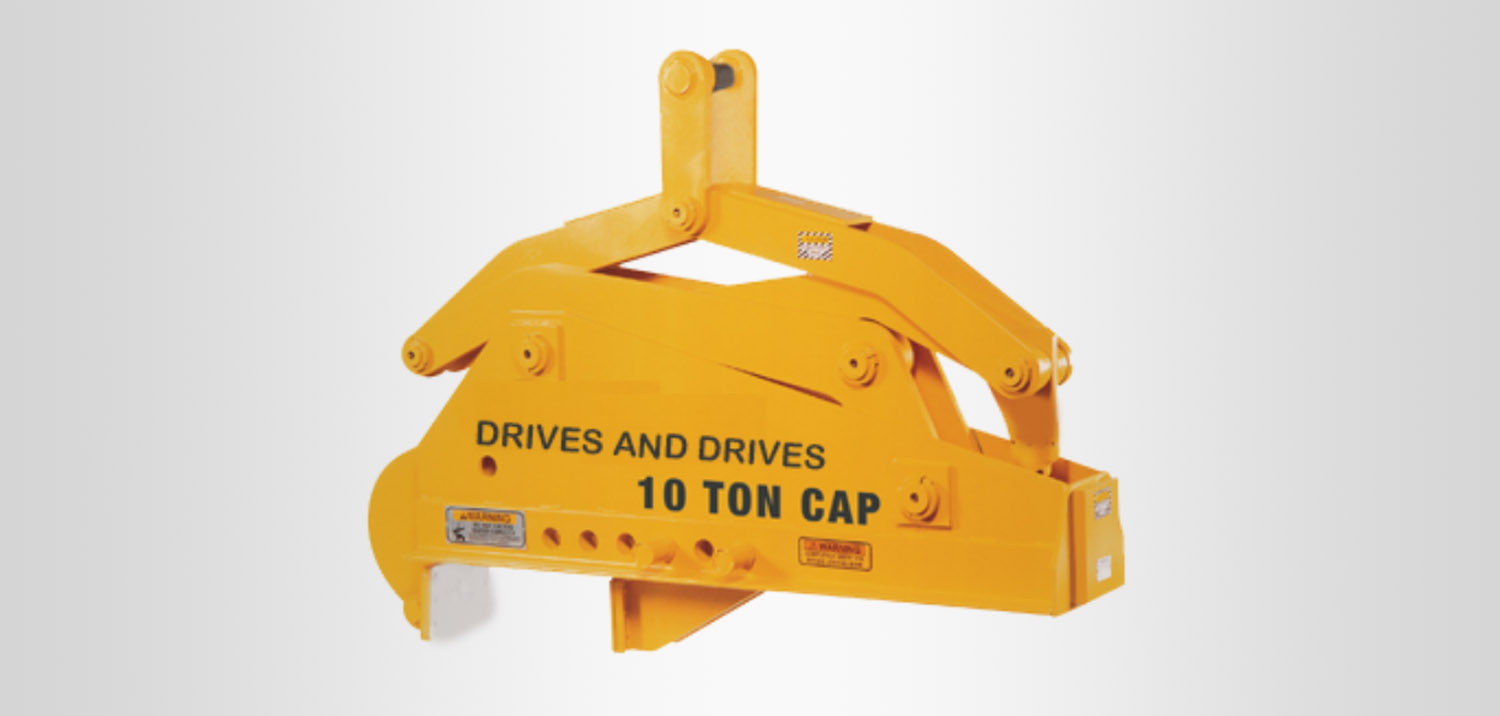
Slab Lifting Tong :
A slab lifting tong is a heavy-duty lifting attachment used to safely lift and transport steel slabs and plates from the side.
It provides a strong grip on the slab edges and is operated with an EOT crane, overhead crane or hoist.
Key Features :
- Strong and durable steel construction
- Secure side gripping with self-locking mechanism
- Suitable for vertical and horizontal lifting
- Adjustable for different slab thicknesses
- Hardened / replaceable gripping jaws
- Customizable as per slab size and capacity
Applications :
- Steel plants & foundries
- Fabrication industries
- Warehouses & stockyards
- Material handling operations
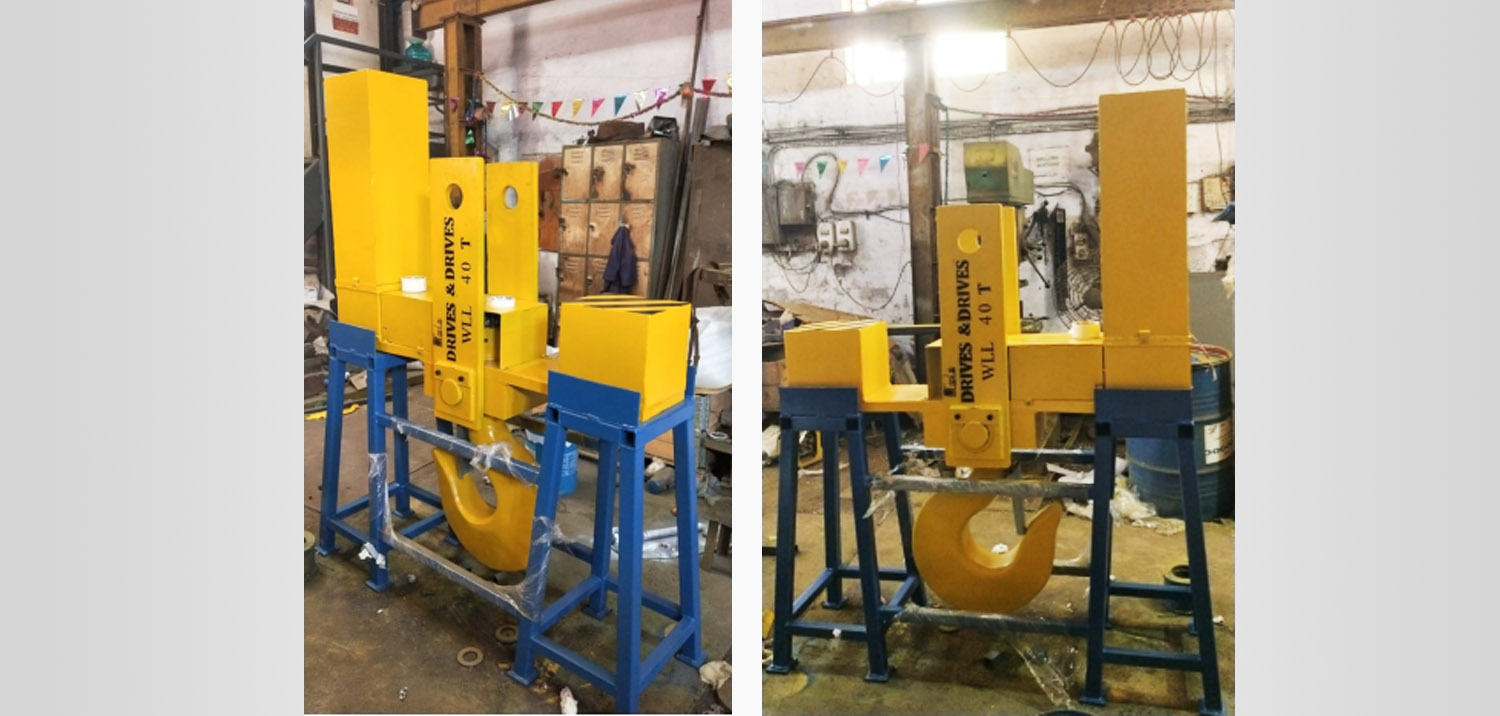
Motorized Rotating Hook
A motorized rotating hook is a specialized below-the-hook lifting device that allows a crane operator to continuously rotate suspended loads horizontally (up to 360 degrees) under full capacity. It is primarily used in heavy industries to precisely position massive components without requiring ground personnel to manually guide the load with taglines.
Key Mechanical Components :
The system relies on a rugged electromechanical assembly housed within the hook block:
- Drive System : Typically utilizes an electric AC or DC motor coupled with a planetary or worm gearbox. This configuration generates high torque at very low rotational speeds, ensuring smooth, controlled movement of heavy payloads.
- Thrust Bearing : A heavy-duty thrust bearing is seated at the base of the hook shank. It is designed to support the entire vertical weight of the payload while simultaneously allowing frictionless horizontal rotation.
- Slip Ring Assembly : To allow for continuous, infinite 360-degree rotation without tangling the electrical cables, a slip ring (rotary electrical interface) transmits power and control signals from the stationary block to the rotating lower assembly.
- Electromagnetic Braking : Integrated into the motor or drive shaft, electromagnetic brakes automatically engage when the rotation control is released. This securely holds the load in its exact orientation and prevents unwanted drifting.
Vertical and Horizontal Lifting Clamps
Lifting clamps are heavy-duty mechanical below-the-hook devices specifically designed to grip, hoist, and transfer steel plates or sheet metal. They rely on friction and leverage to secure the load.
Vertical Lifting Clamps :
- Function : Designed to lift single steel plates in a vertical position or to rotate plates from a horizontal flat position to a vertical orientation (upending).
- Mechanism : Operates using a pivoting cam and a stationary lower jaw. When the crane applies upward lifting force, the cam rotates and "bites" into the steel plate. The grip is proportional to the payload—the heavier the plate, the tighter the clamping force.
- Key Feature : Most vertical clamps feature a manual locking lever that pre-tensions the spring-loaded cam. This ensures the clamp stays securely attached to the plate even when there is no slack/tension on the crane wire rope.
Horizontal Lifting Clamps :
- Function : Used strictly to lift, transport, and stack steel plates (or stacks of plates) in a flat, horizontal orientation.
- Mechanism : These clamps lack a locking spring mechanism and instead rely entirely on the tension of the lifting slings. As the crane hoists upward, the angled pull of the rigging forces the jaws of the clamp to bite down firmly on the edges of the plate.
- Key Feature : Horizontal clamps must always be used in pairs (or sets of four suspended from a spreader beam) to balance the load properly and maintain constant tension on the jaws. If the rigging goes slack, the clamps will disengage.
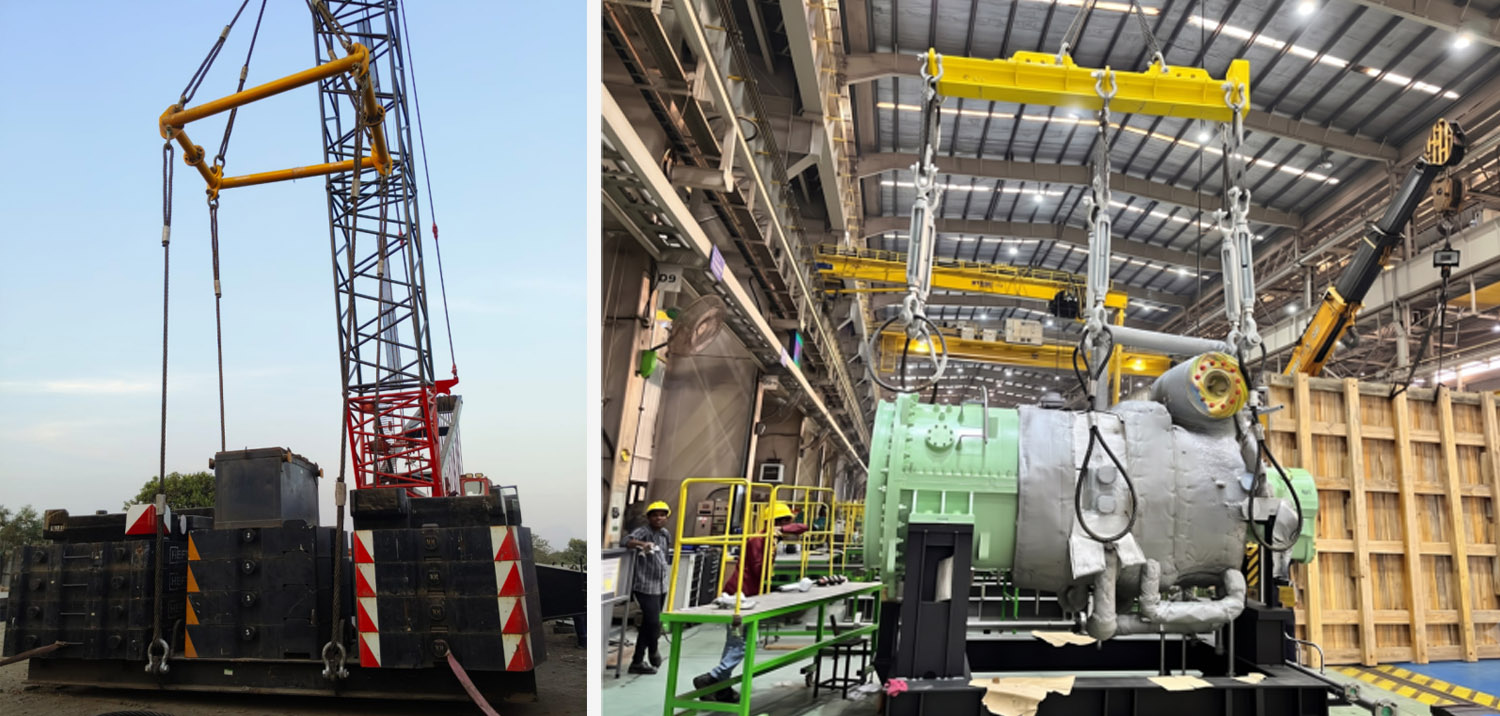
Nacelle Lifting Beam
A nacelle lifting beam is a highly specialized, heavy-duty below-the-hook lifting device designed specifically for the wind energy sector. It is used to safely hoist, balance, and precisely position a wind turbine nacelle - the massive housing containing the generator, gearbox, and drivetrain—onto the turbine tower during construction or maintenance.
Key Mechanical Features :
- High-Capacity Structural Frame : Nacelles are exceptionally heavy. These beams are engineered to handle extreme safe working loads (SWL), typically ranging from 50 tons to well over 400 tons, depending on the turbine's megawatt rating.
- Center of Gravity (CoG) Adjustment : The internal components of a nacelle create an uneven, asymmetrical weight distribution (e.g., a massive generator at the rear and a rotor hub connection at the front). To compensate, nacelle beams often feature hydraulic leveling cylinders, sliding counterweights, or motorized adjustable lifting bails. This allows the crane operator to shift the lifting point to match the exact CoG, keeping the load perfectly horizontal.
- Multi-Point Rigging : The beam usually employs a 3-point or 4-point rigging configuration using heavy-duty synthetic slings or wire ropes. These connect directly to the engineered lifting trunnions or designated lug points on the nacelle's internal chassis.
- Dynamic Load Handling : Especially in offshore wind applications, these beams are built to withstand high wind loads and dynamic marine forces, sometimes integrating with active heave compensation systems to stabilize the load during installation.
Wind Turbine Toggle Lifting Tool / Saddle: Technical Overview
A toggle lifting tool (sometimes referred to as a lifting saddle, upending tool, or lifting toggle pin) is a highly specialized below-the-hook device used heavily in the wind energy sector. It is designed to securely lift, upend, or transport massive hollow components—most notably wind turbine tower sections and foundation monopiles—without the need to wrap bulky slings around the outside of the tower.
Key Mechanical Features :
- The Toggle Mechanism The core of the tool features a pivoting T-bar, J-hook, or toggle pin. The crane lowers the tool, and this pin is inserted directly through the pre-drilled bolt holes on the tower's flange (or into a larger structural cavity).
- The Locking Action : Once inserted past the flange, the toggle flips 90 degrees (usually via gravity, an internal spring, or a remote-controlled hydraulic actuator). It sits flush and perpendicular against the inside of the flange, creating a secure, fail-safe anchor point.
- Operational Efficiency : Because the tool engages directly with the structural steel of the tower itself, it guarantees excellent weight distribution. It also drastically reduces rigging time and improves safety, as ground crews do not have to manually wrap or unwrap heavy chain slings around a massive steel cylinder.